

I’ve been using SE Ranking since 2020 to track my blog’s keyword performance—not because it’s perfect, but because it delivers 80% of Semrush’s features at 40% of the cost.
Let me be clear: I’m not an SEO agency. I’m a blogger who’s paid for SE Ranking with my own money for 5+ years, tracking thousands of keywords and running hundreds of site audits. This isn’t sponsored content.
This SE Ranking review is completely honest. I’ll share exactly what works brilliantly, what frustrates me occasionally, and who should (or shouldn’t) spend their money on this SEO tool in April 2026.
Affiliate Disclosure: This article contains affiliate links. If you purchase SE Ranking through my links, I earn a commission at no extra cost to you. However, every opinion here is based on my 5+ years of real usage since 2020.
💡 Why Trust This Review?
I’m Nitin Dabas, founder of DabasBlog. Here’s my proof of experience:
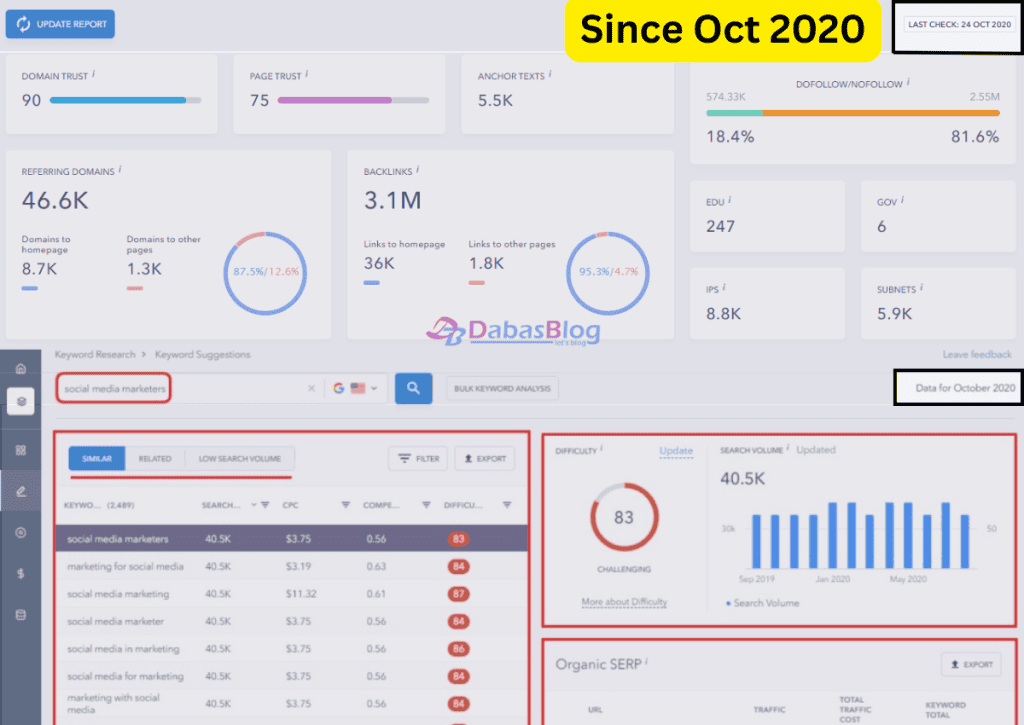
✅ Using SE Ranking since Oct 2020 (5+ years)
✅ Tracked 5,000+ keywords across 10 blogs
✅ Run 20+ site audits monthly
📋 What You’ll Learn in This SE Ranking Review
- How SE Ranking’s features perform in real-world daily use (not marketing claims)
- Honest pricing breakdown with hidden costs revealed
- When SE Ranking beats Semrush and Ahrefs (and when it doesn’t)
- Whether SE Ranking is worth $65-$259/month for bloggers, freelancers, or agencies
- Real pros and cons from someone who checks ranking positions almost every morning
If you’re tired of vague “this tool is amazing” reviews, you’re in the right place. Let’s dive into what SE Ranking actually delivers after 5+ years of daily use.

Quick Verdict
🔍 SE Ranking vs Competitors: At-a-Glance Comparison
|
Feature |
SE Ranking |
Semrush |
Ahrefs |
|---|---|---|---|
|
Starting Price |
$65/mo |
$139/mo |
$129/mo |
|
Backlinks Database |
2.9T |
25T |
28T |
|
Rank Tracking |
Daily (all plans) |
Daily |
Daily |
|
White Label Reports |
✅ Pro+ |
✅ Guru+ |
❌ |
|
AI Search Tracking |
✅ |
✅ |
❌ |
|
Free Trial |
14 days |
7 days |
7 days |
|
Keyword Research Tool |
✅ |
✅ |
✅ |
|
Site Audit |
✅ |
✅ |
✅ |
|
PPC Tools |
❌ |
✅ |
❌ |
|
Best For |
Bloggers, SMBs |
Agencies, Enterprises |
Link builders |
Source: Data verified on April 01, 2026
My Honest Take (After 5+ Years)
However, if you need:
Bottom Line: The 14-day free trial is completely risk-free. Test the rank tracker, run a site audit, and see if it fits your workflow. If you’re budget-conscious and SEO-focused (not PPC), SE Ranking is an excellent choice.
No Credit Card Required • Cancel anytime • Full feature access

What’s New in SE Ranking (2026)?
SE Ranking has evolved significantly since I started using it in 2020. The platform rolled out major updates in 2024-2025 that genuinely improved performance. Here’s what changed—and why it matters if you’re considering this SEO tool in April 2026.
AI Search Toolkit 🤖 (2026’s Biggest Addition)
This is SE Ranking’s newest and most exciting feature suite—tracking your visibility in AI-powered search results like Google AI Overviews, ChatGPT, Perplexity, and Gemini.
Why it matters: Google’s AI Overviews now appear for 92% of commercial queries. If you’re not tracking AI visibility, you’re missing a huge traffic opportunity.
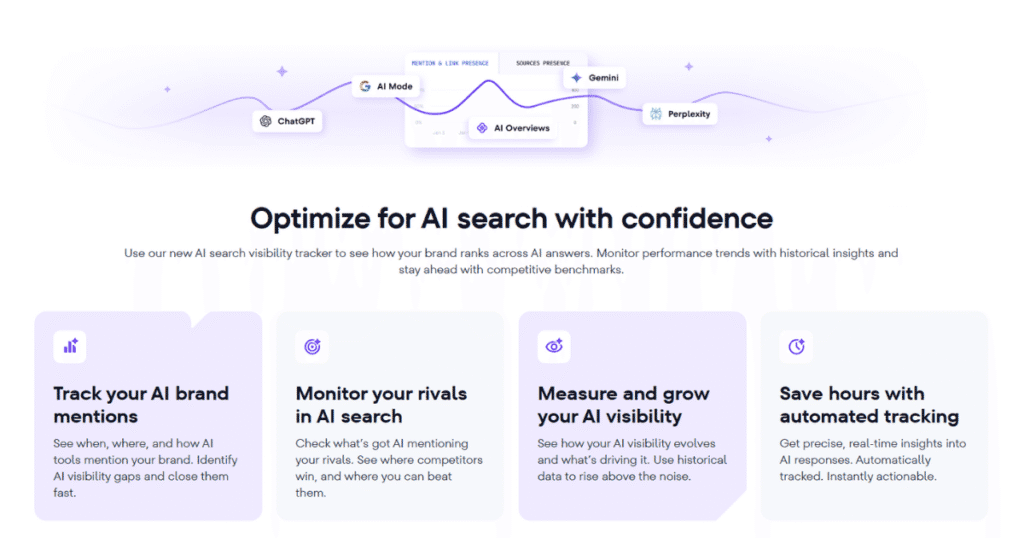
What the AI Toolkit Includes:
1. AI Overviews Tracker
Monitor whether your content appears in Google’s AI-generated answer snippets. SE Ranking shows which keywords trigger AI Overviews, whether you’re cited as a source, and your competitors’ AI visibility.
2. ChatGPT Visibility Tracker
Track brand mentions and links in ChatGPT responses—both linked and unlinked mentions—helping you understand your authority in AI-generated responses.
3. Unified AI Visibility Tracker
See how often your brand appears across ChatGPT, Perplexity, Gemini, and other AI platforms. Measures your “share of voice” across topics with competitor benchmarks.
👉 This toolkit launched in 2025 and positions SE Ranking ahead of most competitors. For AI-era SEO planning, this feature alone justifies the subscription.
Major Platform Updates (2024-2026)
- 10x growth in the referring domains database for Backlink Checker
- 30% more keywords added to the Competitive Research database
- 29% more accurate organic traffic estimations using AI-powered algorithms
- Insights Tool – Automatic alerts for high-potential keywords, competitor movements, keyword cannibalization, and traffic spikes/drops
- Share of Voice metric – Track your website’s organic traffic share vs competitors
- AI-powered Content Editor – Smarter keyword recommendations and semantic analysis
- Website Audit 2.0 – Enhanced technical SEO checks and Core Web Vitals analysis
The Bottom Line: The platform I use today is fundamentally more powerful than what I paid for in 2020. These updates justify the small price increase—you’re getting significantly more value per dollar.
SE Ranking Review: What Is It?
SE Ranking is an all-in-one SEO platform designed to help website owners, bloggers, and agencies improve their search engine visibility by tracking keyword rankings, auditing sites, analyzing competitors, and much more —all from a single dashboard.
Founded in 2013 (originally launched in 2012 by Valery Kurilov and Alex Dymovich), SE Ranking has grown into a comprehensive SEO toolkit trusted by over 1.5 million users across 190+ countries.
Think of it as your complete SEO command center. Instead of juggling multiple SEO tools, SE Ranking combines keyword research, rank tracking, site audits, backlink analysis, competitor research, and content optimization into one affordable platform.
My Experience: Why I Chose SE Ranking in 2020
When I started using SE Ranking in 2020, I was looking for a simple marketing tool to track my blog’s keyword rankings without spending $100+/month on premium tools like Semrush or Ahrefs.
At that time, SE Ranking’s Optimum plan cost $31/month (now called the Essential plan at $65/month). It gave me almost all the important features I used in other expensive tools—but at less than half the price.
I could track daily rankings, run monthly site audits, research keywords before writing posts, and analyze what my competitors were doing—all within my budget.
Five years later, I’m still using it because it continues to deliver what I need without unnecessary complexity or costs.
👥Who Should Use SE Ranking?
Here’s who benefits most from this seo tool:
- Solo Bloggers tracking 100-500 keywords across 1-5 websites
Why it works: Affordable pricing, daily rank tracking, unlimited reports—everything a blogger needs without extra fluff.
- Freelance SEO Consultants managing 3-10 client websites
Why it works: White-label reports (Pro plan), multiple projects, and competitive pricing let you stay profitable while delivering professional results.
- Small Marketing Agencies needing client-facing reports
Why it works: White-label reporting, team collaboration features (Pro/Business plans), and you can manage 30-50+ projects depending on your plan.
- Budget-Conscious Users who need core SEO features
Why it works: At $65-$119/month, you get 80% of what Semrush offers at 40% of the cost. Perfect if budget is a concern, but you still need professional tools.
❌ Who Shouldn’t Use SE Ranking?
SE Ranking isn’t for everyone. Here’s who should avoid SE Ranking:
- Large Enterprises (1000+ employees)
Why: Limited API integrations, slower crawl speeds for massive sites (10,000+ pages), and a lack of dedicated account managers that enterprise tools provide.
- PPC-Focused Marketers running heavy Google Ads campaigns
Why: SE Ranking’s paid search tools are basic. If you need deep PPC analysis, Semrush or SpyFu are better choices.
- Users Needing the Largest Backlink Database
Why: SE Ranking’s backlink index is about 20-30% smaller than Ahrefs. If backlink research is your primary need, Ahrefs wins.
- Those Wanting a Free Plan
Why: SE Ranking only offers a 14-day free trial (no credit card required). There’s no permanent free plan like Semrush offers.
SE Ranking Pricing 💰
It uses a pay-per-keyword model with three main plans. SE Ranking pricing is one of its biggest advantages. Here’s the honest breakdown with hidden costs revealed.

Current Pricing Plans (Monthly Billing)
|
Plan |
Essential |
Pro |
Business |
|---|---|---|---|
|
Price |
$65/mo |
$119/mo |
$259/mo |
|
Keywords Tracked |
500 |
2,000 |
5,000 |
|
Projects |
10 |
30 |
Unlimited |
|
User Seats |
1 |
3 |
5 |
|
White Label |
❌ |
✅ |
✅ |
|
AI Search Toolkit |
❌ |
✅ |
✅ |
|
API Access |
❌ |
❌ |
✅ |
|
Historical Data |
12 months |
24 months |
36 months |
Annual billing is available at a 20% lower cost ($52, $95.20, $207.20, respectively).
💡 What’s NOT Included (Hidden Costs Revealed)
|
Add-On Feature |
Essential |
Pro |
Business |
Extra Cost |
|---|---|---|---|---|
|
Content Marketing Module |
❌ |
❌ |
❌ |
+$29/mo |
|
AI Search Toolkit |
❌ |
✅ |
✅ |
+$89/mo |
|
Local Marketing Tool |
❌ |
❌ |
❌ |
+$23/mo |
|
White Label Reports |
❌ |
✅ |
✅ |
+$50/mo |
|
API Access |
❌ |
❌ |
✅ |
Included |
|
JavaScript Rendering |
❌ |
✅ |
✅ |
Included |
My experience: I started with the Essential plan ($65/mo) and upgraded to Pro ($119/mo) after 8 months when I needed white-label reports for clients. The AI Search Toolkit is now included in Pro+, which is a massive value add.
📖 Read Complete Guide: SE Ranking Pricing Breakdown (April 2026) – Save Up to $621/Year
SE Ranking Features Breakdown
Now that you understand what SE Ranking is and who it’s for, let me walk you through the features I actually use. I’m not going to list every feature the tool offers. Instead, I’ll focus on the ones that matter most for bloggers and small agencies, based on my 5+ years of hands-on experience with SE Ranking.
Rank Tracker (My Most-Used Feature)
This is the feature I check almost every morning. SE Ranking’s Rank Tracker shows me exactly where my blog posts stand for target keywords across different search engines and locations. It’s the core reason I subscribed in 2020, and it remains my most-used SEO ranking tool.
For beginners: Rank tracking is like checking your position in a race. When you publish a post targeting “best blogging tools,” you want to know: Where does my page appear in Google? Position 1? Position 50? SE Ranking checks this automatically and shows your rankings without manual searching.

What I like the MOST about the Rank Tracker?
1. Location-Specific Tracking
I track rankings for both India and the United States simultaneously. This matters because Google shows different results by location. My “SE Ranking pricing” post ranks position 15 in India but position 7 in the US—without location tracking, I’d never know this difference.
Supports: 190+ countries, mobile vs desktop tracking, city-level precision
2. SERP Feature Tracking
SE Ranking tracks 16+ SERP features, including featured snippets, People Also Ask boxes, image packs, and video carousels. I discovered one of my posts appeared in a People Also Ask box even though it ranked position 15 organically—this brought extra traffic I wouldn’t have known about.
3. Competitor Comparison
Track up to 5-20 competitors (plan-dependent) for the same keywords. When a competitor jumps from position 18 to position 8, I visit their page to see what changed. This helps me learn from their strategies without manually checking each one.
4. Historical Data Graphs
SE Ranking stores ranking history from day one. Visual graphs show upward trends, sudden drops from algorithm updates, or seasonal patterns. I’ve tracked some keywords for 18+ months, and these graphs prove which content strategies work over time.
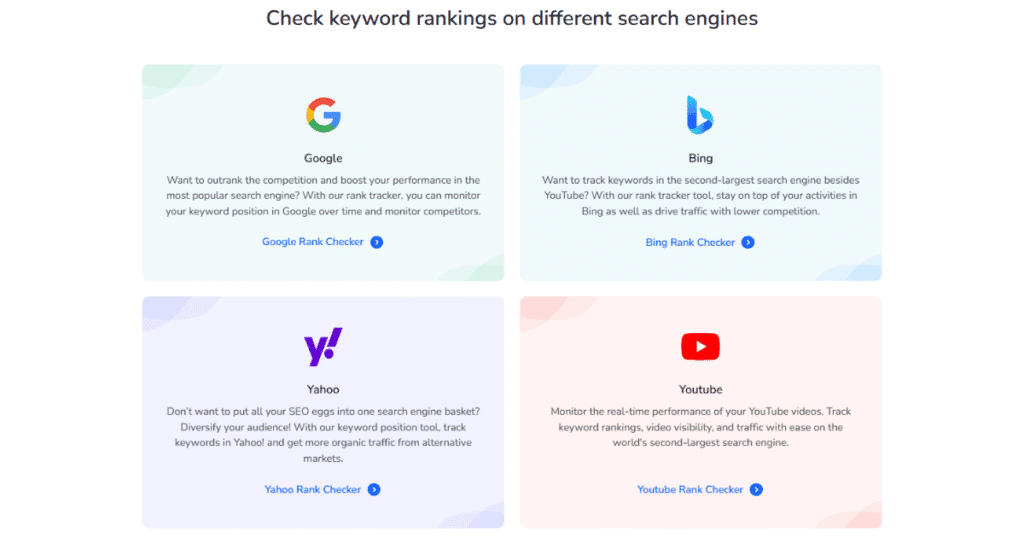
5. Multiple Search Engines
Track Google, Bing, YouTube, Yahoo, and others. I primarily use Google India/US, but occasionally check YouTube rankings for tutorial videos.
What Could Be Better?
1. Updates Aren’t Real-Time
Rankings update daily, but there’s a 6-12 hour lag from actual Google results. When I manually check, SE Ranking might show position 53 while Google shows position 52. The 1-3 position difference doesn’t affect trend monitoring, but it’s not real-time accurate.
2. Mobile vs Desktop Credits
Tracking both mobile and desktop for one keyword uses 2 credits. On the Essential plan (500 credits), you might run out quickly.
My strategy: Track desktop only for most keywords, add mobile tracking only for high-priority ones. Google Search Console gives free mobile+desktop data as backup.
Quick Tips for Beginners:
- Start small: Track 10-20 most important keywords initially, not 500. Add more as you learn the tool.
- Set realistic expectations: Rankings take 3-6 months to improve significantly. Don’t get obsessed with daily rank changes; monthly trends are signals.
- Use ranking alerts: SE Ranking emails you when positions drop below your threshold or break into the top 10. Set these up and stop obsessive daily checking.
- Cross-reference with Google Search Console: SE Ranking shows positions; GSC shows actual clicks and impressions. Together, they give the complete picture.
👉 My Recommendation: Rankings take time. Daily fluctuations of 2-5 positions are normal—I focus on monthly trends, not daily panic. SE Ranking’s graphs make this easy to visualize.
My rating: ⭐⭐⭐⭐½ (4.5/5) — Still my most-used feature after 5+ years.
Read More: Complete SE Ranking Rank Tracker Guide.
Website Audit Tool
I run website audits monthly to catch technical issues before they hurt my rankings. I think that everybody should treat a website audit like a health checkup for your blog – it scans every page, identifies problems (broken links, slow loading, missing meta descriptions), and tells you exactly what needs fixing.
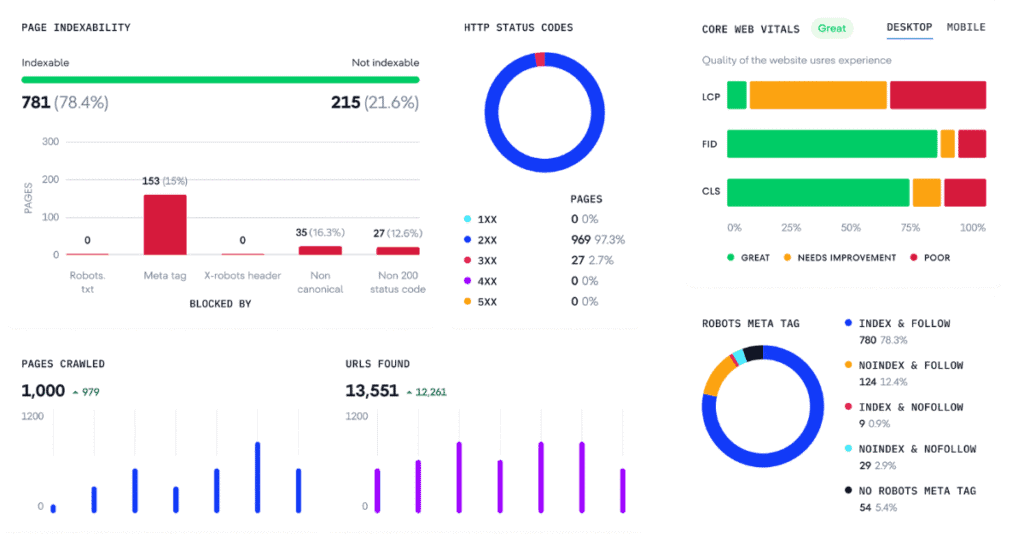
SE Ranking’s Website Audit tool checks 115+ technical factors across your entire site, which includes crawlability, indexing, page speed, mobile usability, internal linking, and HTTPS implementation. After scanning, it gives you an overall health score (0-100%) and groups issues by priority: critical errors, warnings, and notices.

What do I Check Regularly?
1. Broken Links (404 Errors)
It identifies every broken internal and external link on your site. Broken links hurt user experience and can negatively impact SEO. I fix these whenever they’re flagged.
Real example: I deleted 3 old posts but forgot to remove internal links pointing to them. The audit tool caught 15 broken links I’d have missed manually.
2. Duplicate Content Issues
Sometimes, unknowingly, meta descriptions and H1 headings overlap across multiple pages, where it comes into play and detects them. Ultimately, I rewrite them to make each page unique.
3. Missing Alt Tags
It flags pages where images are inserted without Alt Text. Google can’t read images—it relies on alt text to understand them. I write custom alt texts for flagged images.
4. Page Load Speed Issues
This tool identifies slow-loading pages (above 3-4 seconds). Slow pages hurt both user experience and rankings. When flagged, I compress images, minify CS/JavaScript, or switch to faster hosting.
5. Other Technical Checks
In addition to these major checks, it detects canonical tags, robots.txt settings, sitemap errors, HTTPS implementation, internal linking structure, redirect chains, and Core Web Vitals.
Limitations of Website Audit
An honest assessment is not complete until you discuss its improvement areas or limitations.
1. Learning Curve for Beginners
The audit dashboard shows 115+ checks grouped into 16 categories. First-time users might feel overwhelmed figuring out which issues to prioritize.
My tip: Start with critical errors only, then gradually tackle warnings.
2. No Staging Site Audit
Unlike Semrush, SE Ranking can’t audit staging/development sites behind authentication. You can only audit live, publicly accessible websites.
3. JavaScript Rendering Costs Extra
If your site uses heavy JavaScript, you need JavaScript rendering enabled to audit dynamic content properly. This feature is not available in the Essential plan, and you have to pay more to use it in the Pro/Business plans.
Quick Tips for Effective Audits:
- The monthly schedule is ideal: Weekly audits generate too many reports; quarterly audits miss timely issues to fix.
- Fix critical errors first: Don’t try fixing everything at once. Prioritize broken links, indexing problems, and crawl errors first.
- Compare results over time: SE Ranking’s comparison feature shows whether your fixes are working or not. You should track your health score month-to-month.
My rating: ⭐⭐⭐⭐ (4/5) — Solid audit tool for beginners with room for more detailed fix recommendations.
Backlink Checker
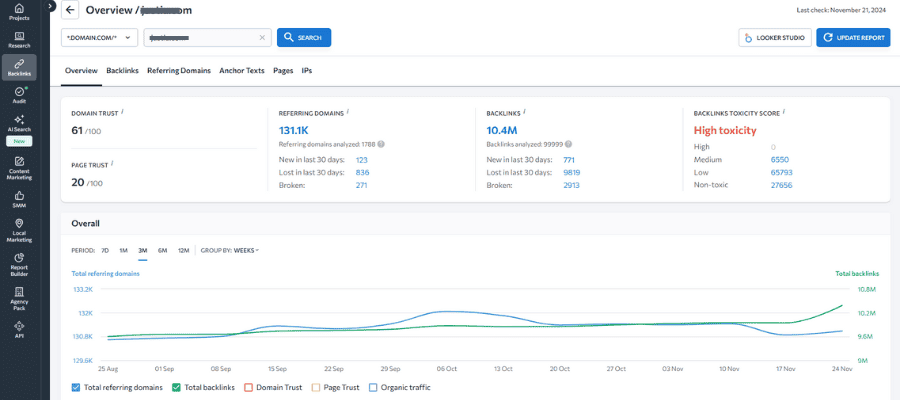
Backlinks are links from other websites pointing to yours. Think of them as votes of confidence—more quality backlinks generally mean higher rankings. SE Ranking’s Backlink Checker helps you monitor who’s linking to you, assess link quality, and spot potentially harmful spam links.
Honestly, SE Ranking’s backlink database isn’t as comprehensive as Ahrefs or Majestic. But after using it for 5+ years, I’ve found it’s good enough for monitoring my blog’s link profile without paying premium prices for features I rarely use.
What Do I Actually Track?
1. New Backlinks Acquired Each Month
I check this at the start of every month to see which sites linked to my blog naturally (or from outreach campaigns). SE Ranking shows new backlinks with dates, so I can correlate link acquisition with traffic spikes or ranking improvements.
2. Referring Domains Count
This is the metric I watch most—how many unique websites link to mine. SE Ranking tracks total referring domains and shows the monthly growth trends. More importantly, it separates dofollow vs nofollow links, which matters for SEO value.
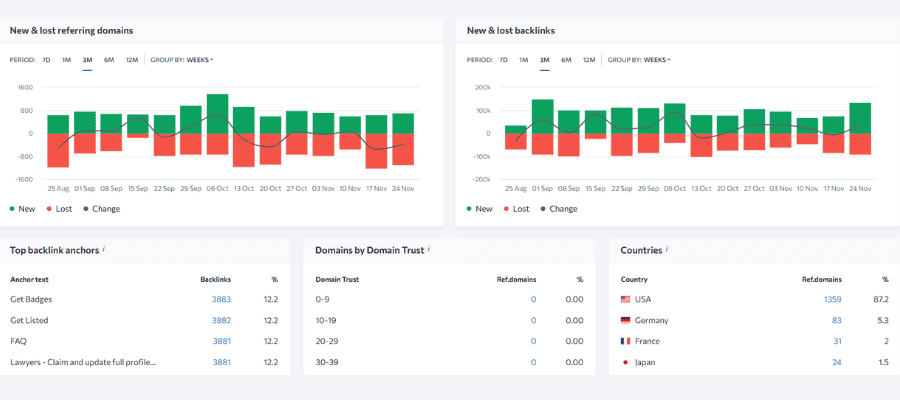
3. Toxic Backlinks
SE Ranking assigns spam scores to backlinks and flags potentially harmful ones. I review these quarterly and disavow obvious spam (adult sites, foreign gambling sites, scraper blogs).
My approach: I don’t obsess over every flagged link—Google is smart enough to ignore most spam automatically.
4. Anchor Text Distribution
The tool shows which anchor texts people use when linking to you. Healthy anchor text should be varied: branded terms (“DabasBlog”), naked URLs (“dabasblog.com”), and topical keywords (“blogging tips”).
Red flag: If 80% of your anchors are exact-match keywords, that’s unnatural link building.
|
Tool |
Backlinks Indexed |
Domains |
Pages in Index |
|---|---|---|---|
|
SE Ranking |
2.9T |
357M |
6B |
|
Ahrefs |
28T |
500M |
493B |
The above-mentioned data is fact-checked and updated on 01 Apr 2026
The Reality: SE Ranking’s backlink index is about 20-30% smaller than Ahrefs. The gap exists, but it’s not as dramatic for most bloggers.
My strategy:
- I use SE Ranking for ongoing monitoring (new links, toxic links, anchor text trends)
- If I’m doing deep competitor backlink analysis or building a comprehensive link-building strategy, I’d use Ahrefs for that specific project
Where SE Ranking Falls Short?
1. Smaller Index Than Ahrefs
For hyper-competitive niches where every backlink matters, or professional link-building for clients, Ahrefs provides more comprehensive data.
2. Slower Backlink Detection
New backlinks sometimes take 2-4 weeks to appear in SE Ranking’s index. Ahrefs typically finds them within days.
For most bloggers, this delay doesn’t matter—backlinks accumulate slowly anyway. But if you’re running active outreach campaigns and want immediate confirmation, it’s frustrating.
3. Limited Historical Data
SE Ranking stores 12 months of backlink history. Ahrefs goes back several years. If you need to analyze long-term link-building trends or recovery from a Google penalty years ago, SE Ranking won’t help.
Quick Tips for Backlink Monitoring
- Monthly checks are sufficient: Unlike rank tracking (daily), backlinks grow slowly. Monthly checks prevent you from wasting time.
- Focus on referring domains, not total backlinks: 10 unique domains linking to you matter more than 100 links from the same domain.
- Don’t panic over spam scores: SE Ranking flags potential spam, but Google ignores most of it automatically. Only disavow obvious spam (adult sites, gambling, foreign language spam).
- Use Backlink Gap for outreach: Compare your profile with competitors, find sites linking to them but not you, then pitch those sites.
My rating: ⭐⭐⭐½ (3.5/5) — Good enough for most users, but not industry-leading.
Competitor Research
Competitor research means analyzing other websites in your niche to understand why they rank higher than you. Which keywords are they targeting? What content format works for them? How strong is their backlink profile? SE Ranking answers these questions without requiring you to manually research each competitor.
I analyze top-ranking competitors regularly to understand what’s working in my niche. This seo tool helps me see which keywords they rank for, how much traffic they’re getting, and where their backlinks come from.
Features I Actually Use
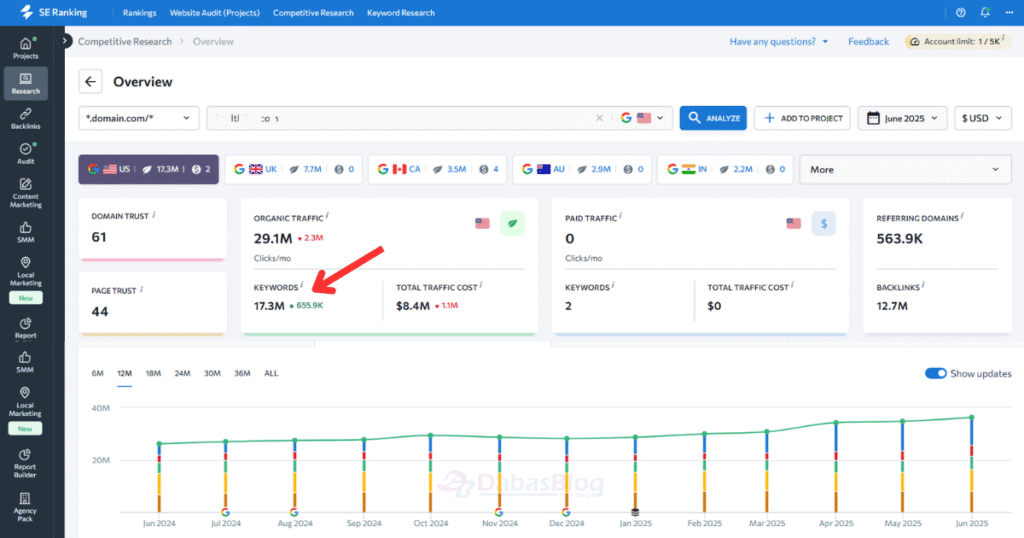
1. Top Competitor Keyword Lists
SE Ranking shows me every keyword a competitor ranks for in organic search—sorted by position, search volume, and keyword difficulty. This is a goldmine of data for content planning.
How I use it:
- Enter a competitor’s domain
- Filter for keywords ranking in positions 1–10
- Scan the list for topics I haven’t covered yet
If a competitor ranks for “best blogging tools for beginners” and I don’t have that post, I add it to my content calendar.
Why it’s useful: You’re not guessing what content to create—you’re seeing what already works in your niche.
2. Estimated Organic Traffic
SE Ranking estimates the monthly traffic competitors receive from organic search. This helps me identify which competitors are genuine threats versus those with inflated domain authority but low actual traffic.
Example:
- A site with 10,000 backlinks but only 2,000 monthly visitors usually has weak content
- Another site with 500 backlinks and 15,000 monthly visitors clearly has better content and intent match
I prioritize learning from the second type of site.
3. Top Performing Pages
SE Ranking shows which specific pages drive the most traffic for competitors. This reveals their content strategy—are they winning with long-form guides, product reviews, or comparison posts?
I noticed one competitor gets 40% of their traffic from 5–6 pillar posts, not hundreds of thin posts. This shifted my own strategy from quantity to quality.
What Works Well in Competitor Research
- 30% larger keyword database (2024 updates) in many markets improves competitor keyword discovery
- Domain & Page Trust metrics help you see if rankings come from authority or just better content
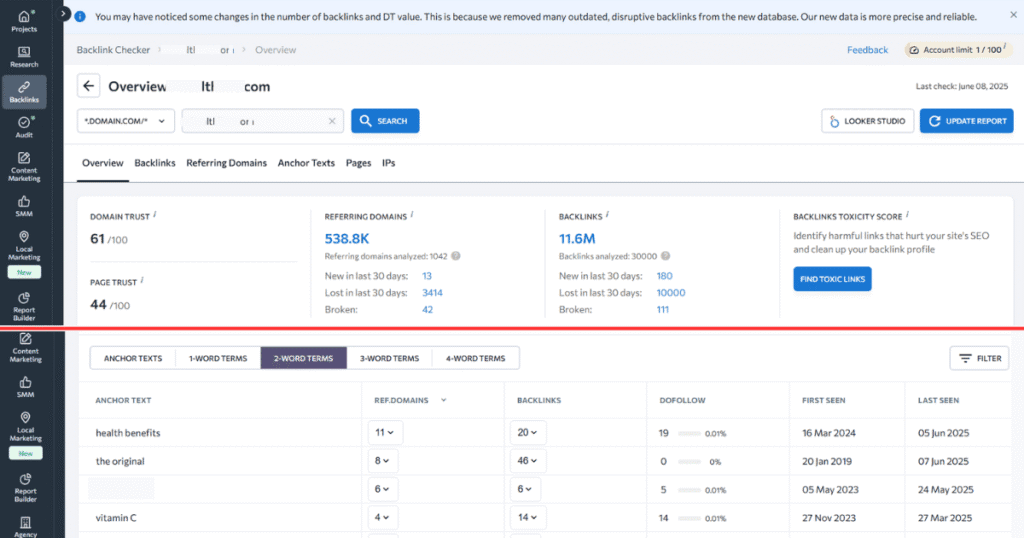
- Backlink Gap feature shows which sites link to your competitors but not you—perfect for outreach planning
Where SE Ranking Falls Short?
- Traffic estimates are modeled, not exact—great for relative comparisons but not for precise numbers
- No real-time competitor alerts when they publish new content or start ranking for new keywords
- Visualizations are basic (tables, lists) vs flashy graphs you see in some expensive tools
Quick Tips for Effective Competitor Analysis
- Do quarterly deep dives, not daily spying—focus on strategy, not noise
- Always open competitor pages manually to understand why their content works
- Look at 6–12 month trends instead of just current rankings
My rating: ⭐⭐⭐½ (3.5/5) — Very good data for bloggers and small agencies, but workflow could be smoother for heavy-duty agency use.
Read more: Complete SE Ranking Competitor Analysis Guide
Keyword Research Tool 🔑
Keyword research means finding what your audience actually types into Google. If you write about “blog tips” but people search for “blogging tips for beginners”, you’re missing traffic. SE Ranking’s keyword research tool shows what people search for, how often, and how hard it is to rank for those terms.
Before writing any major blog post, I open SE Ranking’s keyword tool. It has become my starting point for every content idea.
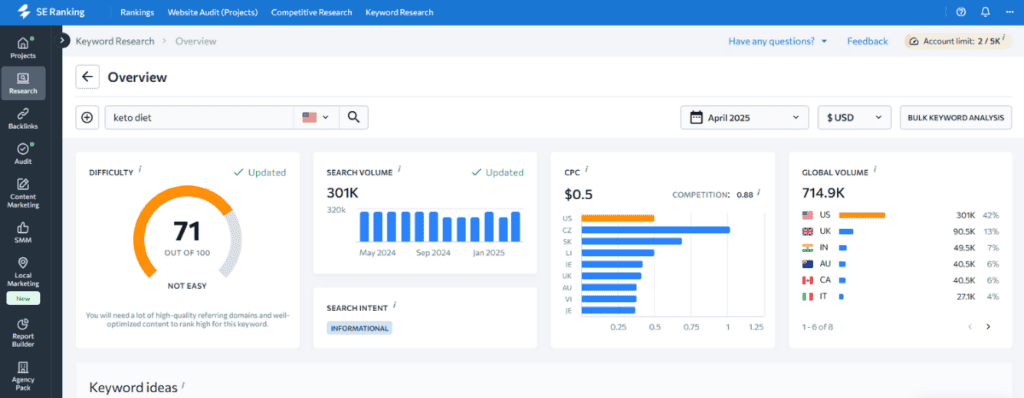
Metrics I Check (And Why They Matter)
1. Search Volume (Monthly)
Shows how many people search for a keyword each month, with country-specific data (India vs US etc.).
- Don’t only chase 10,000+ volume keywords
- 500–2,000 search volume long-tail keywords often convert better because they’re more specific
2. Keyword Difficulty (0-100 Scale)
SE Ranking’s difficulty score estimates how competitive a keyword is based on who is ranking on page 1.
- 0-30: Easy (newer blogs can rank within months)
- 31-60: Medium (requires decent content and backlinks)
- 61-100: Hard (dominated by authority sites)
My strategy:
About 70% of my content targets difficulty under 40, and 30% targets 40–60 as long-term bets.
3. CPC (Cost Per Click)
CPC reveals commercial intent. If advertisers pay $5+ per click, that keyword usually has strong buyer intent.
- For affiliate/commercial posts: prioritize CPC ≥ $3
- For purely informational posts: CPC is less important
4. Related Keywords and Questions
SE Ranking suggests:
- Related phrases
- Question-based keywords
- Long-tail variations
The “Questions” tab often gives me ready-made H2/H3 headings for my content.
How do I Use the Keyword Tool in Practice?
- Step 1: Enter a seed keyword (like “keto diet”)
- Step 2: Filter by search volume (500-5,000) and difficulty (under 40)
- Step 3: Export related keywords and questions
- Step 4: Group them into topic clusters:
- “keto diet”
- “keto diet plan for beginners”
- “how to start keto diet”
- “keto diet benefits”
- “keto diet breakfast ideas”
- “low carb diet vs keto”
- Step 5: Check CPC to understand commercial value
What Makes SE Ranking’s Keyword Tool Stand Out?
- Keyword grouping into logical clusters makes planning content around a topic much easier
- Built-in SERP analysis shows the top 10 results, their authority, backlinks, and word count
- Search intent labels (informational, commercial, transactional) prevent content-intent mismatch
Limitations?
- Search volume estimates, like every seo platform, are approximations, not exact truth
- Ultra-long-tail (5–7 word) phrases are fewer than in giants like Ahrefs
- For massive keyword research campaigns (millions of keywords), you may outgrow it
Quick Tips For Beginners
- Start with low-competition keywords: Target difficulty under 30 for your first posts. Build authority before tackling harder keywords.
- Focus on search intent: Match your content type to what users want. Don’t write a buying guide for an informational query.
- Use related keywords naturally: Sprinkle 20-30 variations as subheadings and naturally throughout sentences.
- Check SERP results: Always analyze the top 10 ranking pages. If they’re all 4,000-word guides, your 1,000-word post won’t compete.
My rating: ⭐⭐⭐⭐½ (4.5/5) — One of SE Ranking’s strongest features for bloggers and small business sites.
Read more: SE Ranking Keyword Research Complete Guide

SE Ranking Exclusive Features ⚡
Beyond the core features, SE Ranking includes several bonus tools that transform it from a simple rank tracker into a complete seo platform. Some of these I use occasionally; others are game-changers for agencies. Here’s what sets SE Ranking apart from basic seo tools.
AI Search Toolkit (Deep Dive) 🤖
We already introduced this in the “What’s New” section. Now let’s examine its practical SEO impact in 2026.
What the AI Search Toolkit tracks:
- Whether your content appears in Google AI Overviews (the AI-generated answer boxes at the top of search results)
- If your brand or pages are cited inside ChatGPT, Perplexity, and Gemini responses
- How often you’re mentioned versus competitors across AI search platforms
- Your “share of voice” in AI-generated answers for your target topics
Why this matters in 2026:
AI Overviews and conversational AI answers are increasingly pushing traditional blue links down the page. You could rank position 3 organically, but if an AI Overview captures most clicks, your traffic suffers.
According to industry data, AI Overviews now appear for 92% of commercial queries in some industries. If you’re not tracking AI visibility, you’re only seeing half the picture of your true search presence.
Real World Application:
I discovered through SE Ranking’s AI toolkit that one of my posts was cited in ChatGPT responses for “blogging tools” queries, even though it ranked position 12 organically. That AI citation brought referral traffic I would never have known about without this feature.
For anyone serious about ranking and visibility in 2026 and beyond, this is a significant competitive advantage over seo tools that only track classic SERP positions.
Content Marketing Module ✍️
SE Ranking’s Content Editor competes directly with tools like NeuronWriter, Surfer SEO, and Clearscope.

What it does:
- Enter your target keyword → the tool analyzes the top 10 ranking pages
- Provides recommendations for:
- Optimal word count based on competitors
- Related terms and LSI keywords to include naturally
- Suggested heading structure (H2s, H3s)
- Readability scores and on-page seo optimization tips
- Real-time content scoring (0-100) as you write
How I use it:
Before writing a major post, I run the Content Editor analysis to understand:
- What depth competitors are providing (are top posts 2,000 or 5,000 words?)
- Which semantic keywords appear consistently across top-ranking content
- What heading structure patterns does Google seem to favor for that query
👉 Like NeuronWriter, don’t blindly chase keyword counts. The Content Editor might suggest using “keyword research” 7 times, but if forcing it makes your writing unnatural, ignore it. Google’s algorithms in 2026 prioritize natural language and genuine depth over exact keyword frequency.
Use the Content Editor as a guide, not a rulebook.
My rating: ⭐⭐⭐½ (3.5/5) — Helpful for content briefs, but requires manual judgment. Available as a paid add-on ($29/month).
SERP Tracker🔍
Before writing a comprehensive post (like this in-depth review of SE Ranking), I always run SERP analysis first.
What it shows:
- The current top 10 ranking pages for any keyword
- Average word count of those pages
- Number of backlinks each page has
- Domain authority scores
- Types of content formats (reviews, comparisons, listicles, guides)
- SERP features present (featured snippets, People Also Ask, video carousels)
How this informs my content strategy:
For “keto diet for beginners“, SERP analysis revealed:
- Top posts average 4,500-5,500 words
- Most have 80+ referring domains
- All include keto food charts
- Several pages embed videos
Why it’s valuable:
You’re not guessing what Google wants—you’re seeing exactly what’s already winning.
My rating: ⭐⭐⭐⭐ (4/5) — Essential for content planning and competitive research.
Read more: Complete SE Ranking SERP Analyzer Guide
White Label Reporting 📊 (Essential for Agencies)
If you’re a freelancer or agency managing client accounts, white-label reporting is invaluable.
What it includes:
- Remove all SE Ranking branding from reports
- Add your agency’s logo, colors, and custom domain
- Schedule automated reports (daily, weekly, monthly)
- Export in multiple formats (PDF, Excel, CSV)
- Provide client portal access with guest logins
- Integration with Looker Studio for live dashboards
Why Agencies love it:
Instead of sending reports branded with “SE Ranking,” clients see your agency branding throughout. This looks far more professional and reinforces your brand, not the tool vendor’s.
Pricing Note:
White-label reports are included in Pro and Business plans only (not Essential).
My experience:
After upgrading to Pro, white-label reports saved me 3-4 hours monthly. I schedule automated reports for clients, and they receive professionally branded PDFs without any manual work from me.
Additional Power Tools
1. Page Changes Monitor
Track specific competitor pages for content updates, meta tag changes, or structural modifications. SE Ranking alerts you when significant changes occur.
Use case: I monitor my top 5 ranking competitors. When they update their content significantly, I receive an alert and can decide whether I need to refresh my own content to stay competitive.
2. On-Page SEO Checker ✅
Analyzes individual pages for optimization opportunities:
- Title and meta description issues
- Heading structure (H1, H2, H3)
- Keyword density and placement
- Image alt text optimization
- Internal linking suggestions
- Content length compared to competitors
My practice: After publishing, I run the On-Page Checker to catch last-minute optimization misses before Google indexes the page.
3. Social Media Management 📱
SE Ranking includes basic social media scheduling and analytics for Facebook, Twitter, and Instagram.
Honest assessment: I don’t use this feature much (I prefer dedicated tools like Buffer). But if you want an all-in-one seo platform that covers social scheduling too, it’s available.
4. Marketing Plan Builder
Generates a customized SEO roadmap based on your website audit results, competitor analysis, and keyword research. Prioritizes tasks by potential impact and difficulty.
Good for: Teams needing structured workflow management and task prioritization.
5. Lead Generator Tool
Finds businesses in your niche with poor SEO, including contact information and basic audit summaries. Designed for freelancers and agencies doing cold outreach.
Why it’s useful: If you’re prospecting for new clients, this tool identifies businesses that clearly need SEO help and provides ready-made talking points for your pitch.
Why These “Extra” Features Matter?
These bonus tools transform SE Ranking from a “rank tracking tool” into a complete seo platform. The AI Search Toolkit alone justifies subscribing in 2026—no other affordable pricing seo tool tracks AI visibility this comprehensively.
For bloggers paying $65/month or agencies paying $119/month, the feature-to-value ratio keeps improving as SE Ranking adds capabilities without dramatically raising prices.
These features show SE Ranking isn’t standing still—they’re actively innovating to stay relevant as search evolves toward AI-powered results.
My assessment: The SE Ranking tool I use today offers significantly more value than what I subscribed to in 2020, yet the price has only increased modestly. That’s rare in the SEO tool industry.
SE Ranking Alternatives
Choosing the right SEO tool depends on your specific needs, budget, and workflow. Here’s an honest comparison of SE Ranking against its main competitors, based on real-world use cases.
SE Ranking vs Semrush
Semrush is the industry giant with the most comprehensive feature set. But is it worth the extra cost?
|
Feature |
SE Ranking |
Semrush |
|---|---|---|
|
Starting Price |
$65/mo |
$139/mo |
|
Keyword Database |
5.4 billion |
26.9 billion |
|
Backlink Index |
2.9T |
25T |
|
Rank Tracking |
Daily, all plans |
Daily, all plans |
|
PPC Tools |
Basic |
Advanced |
|
Content Marketing |
Add-on (+$29/mo) |
Included (Guru+) |
|
White Label |
Pro+ ($119/mo) |
Guru+ ($249/mo) |
|
AI Search Tracking |
✅ |
✅ |
|
Best For |
Bloggers, SMBs, freelancers |
Agencies, enterprises |
When SE Ranking wins:
- Your budget is $65-$119 per month and you need core SEO features
- You primarily focus on rank tracking, site audits, keyword research, and basic competitor analysis
- You need white-label reports but can’t justify $249/month for Semrush Guru
- You’re a blogger or small agency managing 5-15 websites
When Semrush wins:
- You run heavy PPC campaigns and need advanced Google Ads analysis
- You want the largest keyword and backlink databases in the industry
- You need advanced content marketing suite, social media management, and PR tools in one platform
- You’re an enterprise or large agency with 20+ client accounts and unlimited budget
Real-world comparison:
I’ve used both extensively. For my blogging business, SE Ranking provides everything I need at 47% less cost than Semrush. The only time I miss Semrush is when doing deep PPC competitor research—but since I focus on organic SEO, that’s rare.
Simple decision rule:
- Solo blogger / freelancer / small agency (1-10 clients) → SE Ranking
- Mid-size agency (10-50 clients, PPC-heavy) → Semrush
SE Ranking vs Ahrefs
Ahrefs is the undisputed king of backlink analysis. But does everyone need that depth?
|
Feature |
SE Ranking |
Ahrefs |
|---|---|---|
|
Starting Price |
$65/mo |
$129/mo |
|
Backlink Database |
2.9T backlinks, 357M domains |
28T backlinks, 500M domains |
|
Rank Tracking |
Daily updates |
Daily updates |
|
Keyword Research |
5.4 B+ keywords |
19 B+ keywords |
|
White Label |
✅ Pro+ |
❌ Not available |
|
AI Search Tracking |
✅ |
❌ |
|
Site Audit |
115+ checks |
140+ checks |
|
Best For |
Rank tracking, audits, budget-conscious |
Link building, massive databases |
When SE Ranking wins:
- Your main focus is keyword rankings, on-page seo, and website audits
- You need “good enough” backlink data, not the industry’s largest database
- You want white-label reporting for clients (Ahrefs doesn’t offer this)
- You’re working within a tight budget but still need a professional seo platform
- You want to track AI Search visibility (ChatGPT, AI Overviews)—Ahrefs doesn’t have this yet
When Ahrefs wins:
- Your primary work is link building (agency, outreach, digital PR)
- You need the most comprehensive backlink database in the industry
- You analyze detailed historical link data going back 3-5 years
- You want the fastest backlink index updates (Ahrefs updates faster than SE Ranking)
My honest take:
For link-building specialists, Ahrefs is worth the premium. For everyone else doing general SEO work (bloggers, content marketers, small agencies), SE Ranking provides 80% of the functionality at half the cost.
I keep an Ahrefs subscription for quarterly deep-dive competitor backlink research, but I use SE Ranking daily for rank tracking, audits, and keyword research.
SE Ranking vs Ahrefs: Which tool is best for SMBs?
Quick Comparison Table: All Alternatives
|
Tool |
Best For |
Starting Price |
Biggest Strength |
Biggest Weakness |
|---|---|---|---|---|
|
SE Ranking |
Bloggers, SMBs, freelancers |
$65/mo |
Value-for-money, AI tracking |
Smaller backlink index |
|
Semrush |
Agencies, enterprises |
$139/mo |
Largest feature set, PPC tools |
Expensive |
|
Ahrefs |
Link builders |
$129/mo |
Best backlink database |
No white-label reports |
|
Moz Pro |
DA/PA metric fans |
$99/mo |
Brand recognition |
Outdated features |
|
Ubersuggest |
Complete beginners |
$29/mo |
Cheapest option |
Limited accuracy |
Pricing verified April 2026
My Recommendation Based on Your Situation
- If you’re a blogger or content creator:
- Start with SE Ranking ($65/mo Essential plan). It gives you everything needed to grow a blog—keyword research, rank tracking, and site audits—without breaking the bank.
- If you’re a freelance SEO consultant:
- Choose SE Ranking Pro ($119/mo) for white-label reports. You’ll look professional to clients while keeping your tool costs low enough to maintain healthy margins.
- If you’re running an SEO agency:
- Start with SE Ranking Business ($259/mo) for up to 5 team members. Only upgrade to Semrush if you’re managing 50+ client accounts or doing heavy PPC work.
- If you’re a link-building specialist:
- Get Ahrefs. The backlink database depth justifies the cost when link building is your core service.
- If you’re just testing SEO for the first time:
- Use SE Ranking’s 14-day free trial (no credit card needed). It’s more comprehensive than Ubersuggest’s trial and lets you test a real professional seo tool risk-free.
The Bottom Line on SE Ranking Alternatives
SE Ranking isn’t the cheapest SEO tool (that’s Ubersuggest), and it’s not the most comprehensive (that’s Semrush). But it occupies the sweet spot where affordability meets professional functionality.
After testing most major SEO tools over 5+ years, SE Ranking consistently delivers the best value per dollar for bloggers, freelancers, and small agencies. You get 80% of Semrush’s capabilities at 40% of the cost—and that math matters when you’re building a sustainable business.
The real question isn’t “Is SE Ranking the absolute best tool?” It’s “Does SE Ranking give me everything I need to grow my SEO business profitably?” For most readers of this SE Ranking review, the answer is yes.
SE Ranking Pros and Cons
After 5+ years of daily use, here’s my honest breakdown of what works and what doesn’t.
What I Love
|
Pros |
Details |
|---|---|
|
Price |
50% cheaper – $65-119/mo vs $129-139 for Semrush/Ahrefs |
|
Free Trial |
14 days (no card) vs competitors’ 7 days |
|
Rank Tracking |
Daily updates on all plans |
|
Projects |
Unlimited on Pro/Business plans |
|
White Label |
Included on Pro+ (competitors charge extra) |
|
AI Toolkit |
Tracks ChatGPT, AI Overviews, Perplexity |
|
Search Engines |
Google, Bing, YouTube, Yahoo |
What Needs Work
|
Cons |
Details |
|---|---|
|
Backlinks |
Database 20-30% smaller than Ahrefs |
|
Large Sites |
Slower crawls for 1000+ pages |
|
Ranking Lag |
6-8 hour delay (not real-time) |
|
Limited PPC tools |
Not helpful for heavy Google Ads users |
|
API Access |
Business plan only ($259/mo) |
|
Free Plan |
No permanent free tier (only trial) |
|
Content Editor |
Needs 10-15 min tweaking per brief |
The Verdict
SE Ranking’s strengths outweigh weaknesses for bloggers, freelancers, and small agencies. You’re paying 60% less for 80% of the functionality. Limitations only matter if you’re an enterprise team or backlink research is your primary focus.
Final Thoughts on SE Ranking (Review for 2026)
If a tool makes you money, saves you time, and fits your budget, it’s a good tool.
For me, after 5+ years:
- SE Ranking has become my default seo tool
- It replaced a stack of multiple tools (rank tracker + audit + keyword research)
- The AI Search Toolkit makes it future-ready in the AI search era
Who should absolutely try SE Ranking?
- Bloggers who want to rank higher without burning $100+ every month
- Freelancers who need white-label seo reports for clients
- Small agencies who want to manage keywords, audits, and reporting in one place
Who should skip it?
- Hardcore link-building agencies → Go for Ahrefs
- PPC-focused performance marketers → Consider Semrush
My final rating for SE Ranking in 2026:
⭐⭐⭐⭐ (4.2/5) — Best value-for-money all-in-one seo tool for bloggers, freelancers, and small agencies.
Ready to Try It?
👉 Get Your 14-Day Free Trial Here (No Credit Card)
Test the rank tracker, run a full website audit, and decide if it deserves a permanent spot in your SEO stack.
Current Discount: Save up to 20% with annual billing 💰
FAQs: SE Ranking Tool
Have you tested the SE Ranking tool? What is your overall experience with the tool? Please share it in the comments section.
👉 And please, don’t forget to share it.

About Author
Nitin Dabas is your SEO guide. Expert in keywords, on-page SEO, and link-building, he has boosted rankings for countless clients. Read his blog and join his success stories.
Hi Nitin,
I was wandering for the best SEO tool that does a perfect job and comes in my budget too. This SE Ranking review has cleared all my doubts to choose the tool that is a good alternative to SEMrush.
Thank you.
Thanks, Anil. I’m glad to see that you found it useful.
Cheers!
Hi Nitin,
Thanks so much for explaining this wonderful SEO tool. It sure is a good alternative to SEMrush.
-Donna
Thanks for the lovely feedback, Donna. It’s my pleasure.
Of course, it is a good alternative to SEMrush.
Sounds like a powerful tool Nitin. Sensational review, too. Tools do help make our lives easier if we pick good ones with super functionality. SE Ranking sounds like it has the SEO juice.
Ryan
Hi Ryan,
Of course, the SE Ranking tool has great functionalities. I use it for competitive analysis and keyword research.
It’s great that you liked the tool and review. Happy weekend 😊
You explained very well Nitin.
I come to know some new points via this article. Thank you for that.
Your way of reviewing this product is next level. Keep it this.
Thank you for this post.
Keep bring such awesome content on this blog.
Thank you for such lovely feedback, Venkat. It will motivate me to create such valuable articles. Have a great blogging journey ahead!